














Client work management for small marketing agencies involves organizing projects, communicating clearly, and tracking results efficiently. Using simple tools and processes helps agencies stay on schedule, meet client expectations, and grow profitably.
Key takeaways
- Clear task delegation and timelines improve client satisfaction.
- Digital tools streamline communication and track project progress.
- Time tracking and reporting help with billing and resource management.
- Automation reduces repetitive work for faster delivery.
- Mobile apps support field and remote work for marketing teams.
- AI client work tools can assist with data insights and workflow efficiency.
why client work management matters for small marketing agencies in the united states
Managing client work well means projects finish on time, on budget, and according to quality expectations. Small marketing agencies juggle multiple tasks like content creation, social media campaigns, and client meetings. Without good management, tasks get lost in WhatsApp chats or spreadsheets. This leads to missed deadlines, frustrated clients, and lower profits.
In the US, marketing agencies often bill hourly, by project, or on retainer. Keeping track of time spent on each client and task is vital for accurate invoicing, compliance with tax rules, and cash flow management. For example, Chicago agencies face specific state sales tax rules on some marketing services. A clear client work plan helps avoid billing disputes and tax errors.
Using structured job cards or digital boards to organize marketing projects helps avoid chaos. Teams see priorities clearly, reducing confusion and delays. A reliable system builds agency reputation and opens doors to bigger contracts and referrals.
what does effective client work management include?
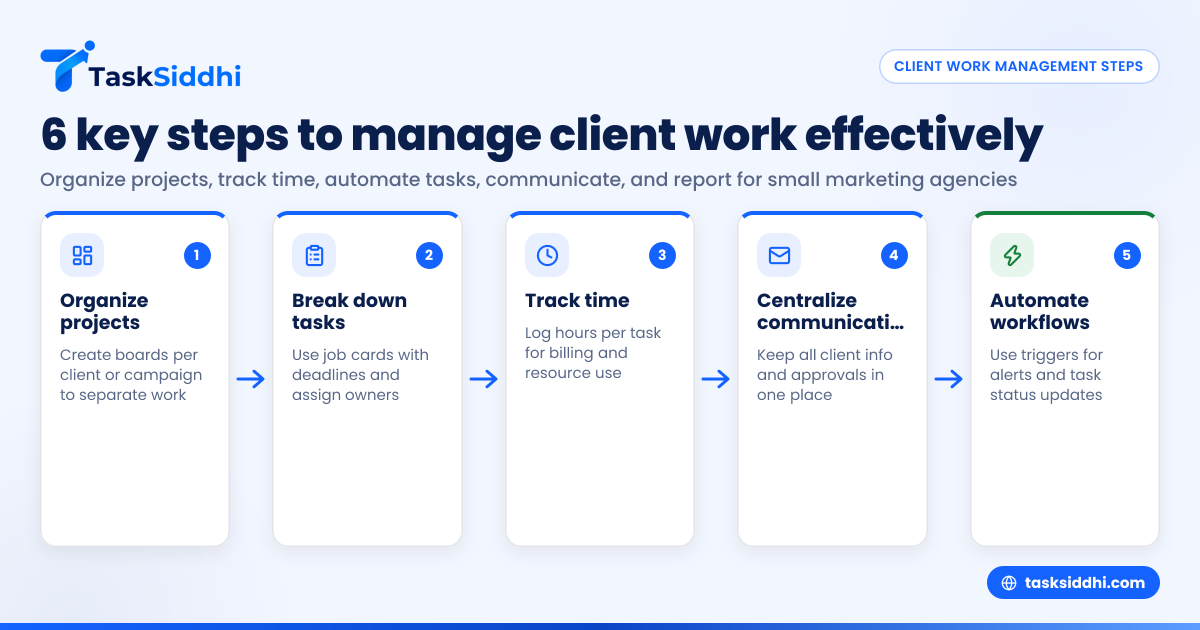
Effective client work management involves several interrelated practices:
- Organizing client jobs into boards or projects. Categorize work by client, campaign, or service type to separate priorities.
- Using job cards or task lists. Break large projects into smaller, trackable tasks with deadlines and responsible team members.
- Tracking time on each task. Enables accurate client billing and resource allocation.
- Centralizing communication. Keep all client details, briefs, and approvals in one place rather than scattered emails or messages.
- Automating routine steps. Use trigger-based alerts or status updates to save time.
- Reporting progress and results. Share updates with clients and internal teams to maintain transparency.
These practices are easy to adopt with the right tools tailored to a small agency’s needs.
how can a small marketing agency improve organization of client work?
Effective organization starts by breaking down your clients’ work into manageable parts and visually tracking them. Creating boards that list jobs or campaigns works well.
- Create boards per client or service. For instance, separate boards for SEO, social media, and email marketing per client.
- Use job cards or tasks for each deliverable. For example, a card could say “Design email template” or “Schedule social posts for week 1.”
- Assign responsible team members and deadlines. Clear ownership and timelines reduce missed steps.
- Use color codes or tags for priority and status. A red tag might mark urgent jobs; green could indicate completed tasks.
By viewing client work this way, agencies in Houston or Detroit can quickly spot bottlenecks and keep projects moving. This method fits well with team sizes of 5 to 30 people and reduces reliance on scattered WhatsApp messages and spreadsheets.
how does ai client work help marketing agencies?
AI client work tools use artificial intelligence to assist marketing agencies in managing projects and data. These tools can help analyze campaign performance, suggest task prioritization, and automate repetitive data entry.
For small agencies, AI can cut down time spent on manual tracking and allow teams to focus on creative tasks. AI might suggest the best days to schedule posts based on engagement data or predict deadlines at risk. Used well, AI improves agency efficiency and client satisfaction by making workflows smarter.
what are the best technology tools for client work management small agency teams?
Small marketing agencies benefit from platforms that combine task management, time tracking, communication, and reporting. A typical tech stack might include:
- Task boards and job cards. Kanban-style visual boards help organize campaigns.
- Time tracking apps. Enable precise billing and monitor resource use.
- Reporting tools. Summarize campaign progress and costs for clients.
- Mobile apps. Support field teams or remote workers to update tasks on the go.
- Automation features. Automate routine alerts or status changes.
Tools like TaskSiddhi offer these features in one place tailored to field and service teams. This integration saves agencies time switching between several tools like email, spreadsheets, QuickBooks, or Slack.
how to implement time tracking in client work
Time tracking helps agencies bill fairly and manage team workloads. Here's how to implement it:
- Choose simple digital timers or apps. Avoid manual spreadsheets prone to error.
- Set up job codes for clients and tasks. Each time entry should link to a client and specific work.
- Train your team to track time daily. Accurate logs depend on consistency.
- Review and approve timesheets regularly. Make corrections before invoicing.
- Use data for billing and analysis. Identify which clients or tasks consume the most time.
For example, an agency in Houston might find social media management consumes far more hours than SEO, adjusting pricing or staffing accordingly.
how can automation improve client work management in a small agency?
Automation reduces repetitive tasks and speeds up workflows:
- Automatically move job cards to next status when approved.
- Send alerts to clients when campaigns launch or reports are ready.
- Generate summary reports weekly without manual effort.
- Assign tasks based on predefined rules, like new leads assigned to specific team members.
This frees leaders in Detroit or Chicago from administrative overload and lets them focus on strategy and client relationships. Automation also improves accountability by keeping workflows consistent.
what processes ensure effective client communication and collaboration?
Clear communication avoids misunderstandings and builds trust:
- Centralize client documents and approvals within a project board instead of scattered emails.
- Schedule regular update meetings or check-ins, logging notes in the system.
- Use task comments or chat to clarify work, ensuring all information is stored with the project.
- Set expectations upfront about deadlines, deliverables, and change requests.
This ensures everyone on the agency and client sides stays informed and aligned, improving project outcomes.
how do reporting and analytics support client work management?
Reporting provides transparency and insights:
- Share progress reports with clients to build confidence.
- Analyze resource usage and project costs to improve pricing strategies.
- Track campaign effectiveness to justify budgets and plan next steps.
- Identify bottlenecks or overdue tasks to intervene early.
Tools that combine task tracking with reporting make it easier for agencies, whether in Detroit or Houston, to present data in professional formats that clients appreciate.
final thoughts
Good client work management helps small marketing agencies deliver consistently and grow sustainably. Combining clear organization, reliable communication, time tracking, automation, and reporting creates a strong foundation. Using a tailored platform that supports mobile access and field teams, like TaskSiddhi, can make managing client work much easier. See how it works at product tour or compare plans at pricing.
Frequently asked questions
How can I manage multiple clients efficiently in a small agency?
Use separate project boards or categories for each client. Break down projects into tasks with assigned owners and deadlines. A visual system helps track progress and prevents tasks from being missed.
What is the benefit of time tracking in client work management?
Time tracking helps with accurate billing and understanding team workloads. It ensures clients are billed fairly and lets the agency optimize resources and pricing.
Can AI improve client work management for small marketing agencies?
Yes, AI tools can automate data analysis, suggest task priorities, and help forecast project timelines. This allows agencies to save time on routine work and deliver better client results.
How does task automation help small agencies?
Automation reduces manual work like sending reminders, updating task statuses, or generating reports. It speeds up processes and improves accountability among team members.
What communication tools work best for client work management?
Centralized platforms that allow storing client documents and maintaining all conversations related to a job in one place work best. Avoid scattered emails and rely on tools with commenting features for clarity.
How do reporting tools benefit client relationships?
Frequent, clear progress reports build transparency and trust with clients. Reporting also helps agencies analyze performance and improve future project planning.