














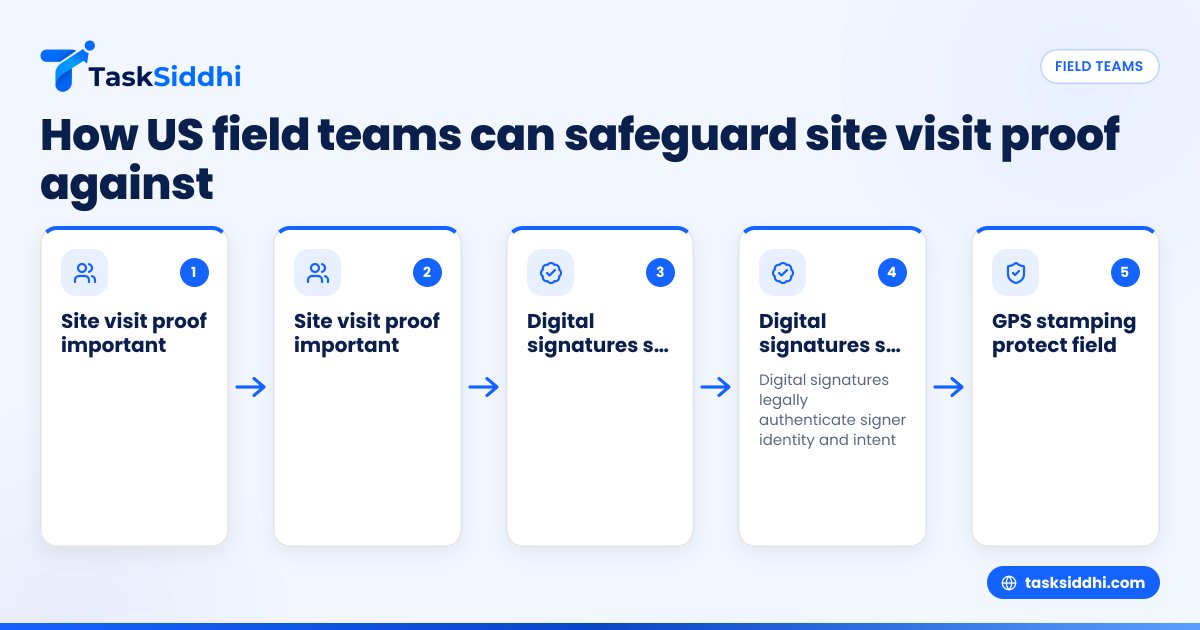
Site visit proof is vital for US field teams to verify job completion with trusted evidence. Digital signatures confirm authentic approvals while GPS stamping records precise location and time. Leveraging an AI site visit app automates capturing this proof, reducing disputes and paperwork costs.
Key takeaways
- Site visit proof documents work done with verifiable data and timestamps.
- Digital signatures legally confirm who signed and when.
- GPS stamping records exact job location, preventing falsified entries.
- An AI site visit app automates proof capture including photos, notes, and location.
- Digital proof protects against contract disputes and builds client trust.
- Industries like construction, HVAC, and inspections benefit greatly.
Why is site visit proof important for US field teams?
Site visit proof confirms services or inspections occurred at the right time and place with agreed scope. It reduces payment or warranty disputes common with US contractors in cities like Chicago or Houston. Clear proof also supports compliance, audits, and quality controls.
Why is site visit proof important for US field teams? (360 characters)
Site visit proof verifies that field work happened as agreed in the right place and time, helping avoid payment conflicts and client disputes. It supports audit readiness and boosts accountability. For service teams from Detroit to Houston, solid proof reduces costly disagreements and speeds billing.
How do digital signatures safeguard site visit proof?
Digital signatures ensure documents are signed electronically with encrypted marks uniquely linked to the signer. They provide legal proof of identity and approval under the US ESIGN Act. Digital signatures simplify approvals, eliminate paper delays, and prevent tampering or forgery. Mobile AI site visit apps capture signatures on site with timestamps.
How do digital signatures safeguard site visit proof? (360 characters)
Digital signatures legally authenticate signer identity and intent, creating tamper-proof, timestamped documents. This protects US service teams from disputes over work acceptance or timing. Captured on mobile AI site visit apps, signatures speed approvals and billing without paperwork.
How does GPS stamping protect field job documentation?
GPS stamping tags proof documents and photos with precise geographic coordinates and timestamps. This confirms the worker was physically present at the job site, preventing fraudulent claims of completed work. For example, a Detroit HVAC tech’s job card with GPS data proves onsite presence. GPS proof improves audit confidence and scheduling accuracy.
What does an AI site visit solution add to proof management?
An AI site visit app automates capturing photos, notes, client digital signatures, timestamps, and GPS location. It guides field teams to complete mandatory proof elements, minimizing errors and delays. Data uploads instantly to managers for easy access and auditing. Integration with QuickBooks and other tools streamlines billing and reporting.
How do I implement digital signatures and GPS for my US field team?
Start by choosing a field management app with digital signatures and GPS tagging. Train your team in capturing site visit proof accurately using the app, setting clear standards in your boards and views. Review proof regularly before client billing. Securely store records for privacy and legal compliance.
How do I implement digital signatures and GPS for my US field team? (360 characters)
Pick a field app with digital signatures and GPS support. Train your team on using it to capture site visit proof consistently. Define standard requirements in your boards and views. Review proof before billing, and securely store data to meet US legal and privacy standards.
TaskSiddhi offers an integrated mobile app that captures signatures and GPS automatically on site, linking proof directly to jobs for full transparency.
How do digital proof tools help resolve client disputes?
Time-stamped digital signatures along with GPS location create strong proof of completed work exactly as agreed. This evidence helps resolve disputes over payments or quality quickly. For example, a Houston landscaping claim about incomplete jobs can be addressed with photos, signatures, and GPS timestamps as irrefutable proof.
How does site visit proof integrate with US business systems?
Integrating digital proof with platforms like QuickBooks or Stripe automates invoicing as soon as signed and GPS-verified work finishes. Linking proof to ERP systems in manufacturing supports quality assurance. This reduces errors, reconciles accounts faster, and improves operational efficiency.
What are the legal considerations for digital signatures in US service jobs?
Under the ESIGN Act, electronic signatures have legal validity if they capture signer intent, attach to a record, and remain secure with accurate timestamps. Protect signed data with encryption and audit logs. Proper digital proof is admissible in contract and payment disputes, supporting your business case.
Common challenges with site visit proof and how to overcome them
- Inconsistent data capture: Standardize proof requirements and use structured digital forms.
- Resistance to new tools: Train teams emphasizing time savings and ease.
- Technical issues in the field: Choose apps that work offline with sync later.
- Data security: Use solutions offering encryption and strong user authentication.
Addressing these challenges improves proof reliability and protects your reputation.
Where can I learn more and compare options?
Explore how digital signatures, GPS, and AI site visit tools streamline proof for US field teams on our product tour. Find plans perfect for your team on the pricing page.
Frequently asked questions
What is the difference between a digital and electronic signature?
A digital signature uses encryption and certificates to verify signer identity securely. Electronic signatures include any electronic method like a typed name. Digital signatures deliver stronger authentication and are preferred in critical US contracts.
Can GPS location be spoofed or manipulated?
While spoofing exists, reputable field apps combine GPS with timestamps and digital signatures to create a hard-to-fake proof chain. Multi-factor verification substantially reduces fraud risks.
How long should I keep site visit proof records?
Keep records at least three to seven years per US tax, contract, and legal guidelines. Digital storage eases archiving and retrieval compared to paper.
Is an AI site visit app expensive to adopt?
Costs vary by provider and features. Scalable plans suit different team sizes. Savings from fewer disputes and faster billing often offset subscription costs.
How can digital proof improve client relationships?
Providing clear, verifiable job completion evidence builds trust and portrays professionalism. Clients get faster invoicing and transparent service quality records.
Are digital signatures accepted by all clients in the US?
Most US clients and government agencies accept digital signatures under the ESIGN Act. For contracts needing wet ink, clarify requirements upfront.
Secure your site visit proof with digital signatures, GPS, and AI-enabled apps to avoid costly disputes and boost your service quality. TaskSiddhi’s tools like time tracking and automation complement proof capture on your mobile app. Take a product tour or check pricing for plans tailored to your US field team.