














Job card software helps Maharashtra manufacturers replace paper job cards with digital job management tools. It simplifies assigning, tracking, and completing manufacturing jobs, saving time and cutting errors. This software also supports compliance with Indian tax and labour rules while improving team coordination.
Key takeaways
- Job card software centralizes job assignments, status updates, and proofs for Maharashtra manufacturers.
- Digital job cards reduce paperwork errors and improve real-time visibility on factory floors.
- Software often integrates with mobile apps for on-site teams and helps track working hours.
- AI features can automate repetitive tasks, making job card updates and reports faster.
- Choosing software with India-specific compliance and GST integration saves accounting time.
- TaskSiddhi offers manufacturing teams job card tools, time tracking, boards and mobile access.
What is job card software and why do manufacturers in Maharashtra need it?
Job card software is a digital solution designed to manage job cards—records of tasks performed in manufacturing. Traditionally, manufacturers in cities like Mumbai, Pune, and Nashik use paper cards or Excel sheets. These methods create delays, lost cards, and miscommunication between the shop floor and management.
With job card software, you create, assign, and track jobs digitally. This means supervisors can instantly update job status on their mobile devices during site visits or factory rounds. The software makes it easy to attach photos or proof of work done, ensuring that your team is accountable. Moreover, it helps comply with the DPDP Act 2023 by securely managing personal data digitally and maintaining an audit trail.
How can AI job card features improve manufacturing operations?
AI job card features automate task allocations and generate insights from job progress data. AI can identify bottlenecks or highlight inconsistent work patterns across shifts. For a Maharashtra manufacturer, this reduces human errors and improves workforce utilisation.
For example, AI can quickly examine multiple job cards to suggest priority tasks if a client order from Maharashtra is delayed. It can also auto-populate recurring job card details for regular maintenance jobs, saving supervisors time. Such capabilities make AI job cards a valuable asset in enhancing productivity and keeping deadlines for client work and service jobs.
How do I implement job card software in my manufacturing business?
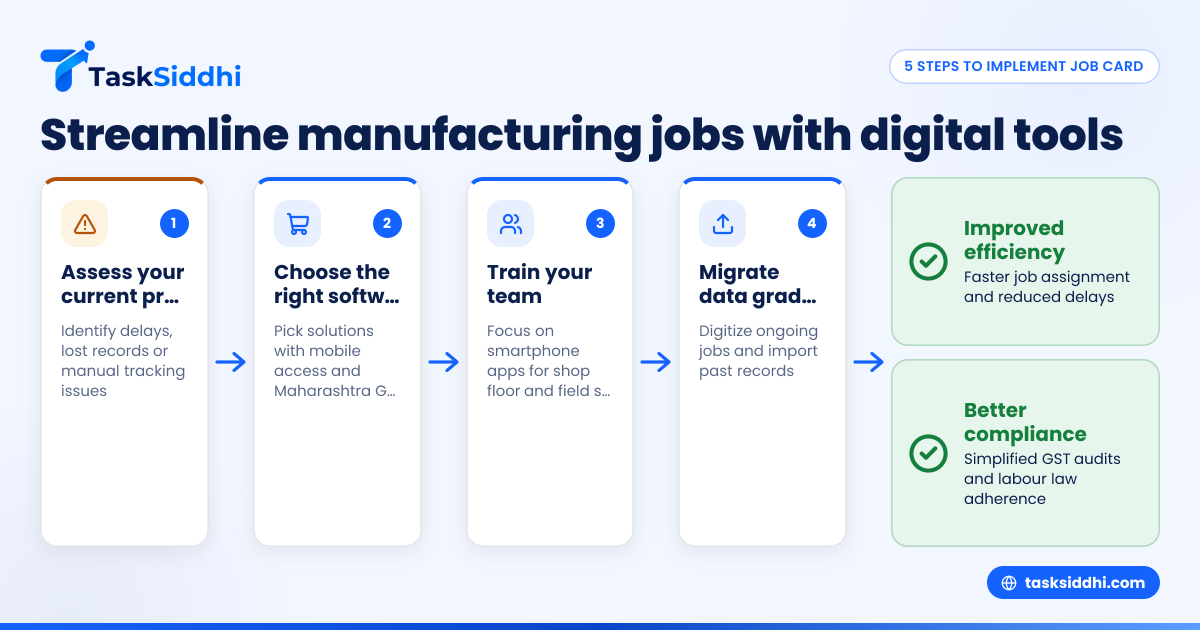
Implementing job card software requires careful planning tailored to your team size and workflow. Follow these 5 steps:
- Assess your current process — Identify pain points like job delays, lost records, or manual tracking hassles.
- Choose the right software — Look for solutions that support digital job cards, mobile site visits, and time tracking. Ensure it meets Maharashtra-specific GST compliance needs.
- Train your team — Organise training sessions for supervisors, workers, and office staff. Focus on using smartphone apps if your team works outdoors or on the shop floor.
- Migrate data gradually — Start by digitising ongoing jobs. Upload any past data required for reference or reporting.
- Monitor and adjust — Use reporting features to track adoption and spot areas for improvement. Refine your workflows using software automation to reduce repetitive steps.
TaskSiddhi offers step-by-step onboarding and mobile access, making it a practical choice for Maharashtra manufacturers moving from paper-based systems.
What benefits can Maharashtra manufacturers expect from job card software?
Manufacturers in Maharashtra can see multiple benefits from adopting job card software:
- Improved efficiency: Quick job allocation and progress updates reduce idle time and delays.
- Error reduction: Automated data input and digital proof prevent mistakes common in paper cards.
- Real-time visibility: Managers get instant access to job status from anywhere, enhancing decision making.
- Better compliance: Digital records simplify audit trails for GST invoices and labour laws.
- Cost savings: Time saved on paperwork and tracking translates to lower operational expenses.
- Enhanced team coordination: Integrated communication tools reduce reliance on WhatsApp for job updates.
By streamlining job cards, businesses in Mumbai or Pune manufacturing units can better manage client orders and service schedules.
How secure is job card software under the DPDP Act 2023 in India?
Job card software providers must comply with the Data Protection and Privacy laws under the DPDP Act 2023. This means manufacturers’ employee and client data collected within the software is stored securely.
Data encryption, role-based access, and audit logs are common features ensuring only authorised persons view or modify sensitive information. Selecting software that adheres to these standards protects your business against data breaches and penalties when handling personal information of Maharashtra field staff or clients.
Regular software updates and user training further enhance security compliance.
What features should I look for in job card software for Maharashtra manufacturing teams?
Key features for Indian manufacturers include:
- Mobile app support: On-site supervisors can update job cards, take photos or add comments instantly.
- Time tracking: Accurate logging of labour hours for jobs with instant reports.
- Customisable job cards: Adapt fields to reflect your manufacturing process or client work types.
- Proof of work: Attach images, GPS location, or signed acknowledgments to job cards.
- Integration with GST and accounting: Simplify e-invoicing, e-way bills, and MIS reporting.
- Automation: Auto-reminders or task reassignments reduce manual supervision.
- Reporting dashboards: Track productivity, pending jobs, and team performance with ease.
TaskSiddhi delivers these capabilities, enabling Maharashtra businesses to digitize and streamline their job card management effectively.
How does job card software fit with WhatsApp-based work communication?
Many Indian manufacturers use WhatsApp groups to coordinate daily tasks. Job card software complements WhatsApp by bringing structure and record-keeping to these informal conversations.
Instead of exchanging photos or job updates through WhatsApp, supervisors can log details directly into job cards. This data automatically syncs across the team and management dashboards. It reduces the reliance on message threads prone to information loss or miscommunication.
TaskSiddhi’s mobile app lets supervisors work alongside WhatsApp but centralizes job proof and time tracking digitally.
Streamlining your job card management with software helps Maharashtra manufacturers reduce errors, save time, and improve overall productivity. To explore how digital job cards and mobile apps can transform your team’s field visits, service jobs, or client work, take a product tour or compare plans at pricing.
Frequently asked questions
Can job card software handle GST e-invoice and reporting?
Yes, many job card tools integrate with accounting software like Tally and support GST compliance, including e-invoicing and generating reports useful for audits. This simplifies tax filing for Maharashtra manufacturers.
How can job card software help with tracking worker attendance and hours?
Software with time tracking features lets supervisors record labour hours per job digitally. This data helps reconcile payroll and monitor staff productivity efficiently.
Is training required to switch from paper-based job cards to digital?
Yes, but most software providers offer clear onboarding and user-friendly mobile apps. Training ensures the entire team is comfortable using the new system, which speeds up adoption.
What if my manufacturing operations are spread across multiple cities in Maharashtra?
Job card software with cloud-based access supports teams working from different locations like Mumbai, Pune, and Nashik seamlessly. Supervisors update jobs remotely, and managers track progress centrally.
Can AI features replace manual job card updates?
AI automates some routine tasks like suggesting job priorities or auto-filling repeated data, but human oversight remains essential to maintain accuracy and context in manufacturing jobs.
How does using job card software improve customer satisfaction?
Faster job completion and better communication facilitated by software means Maharashtra clients receive timely updates and quality work, helping build trust and repeat business.